One Porch Light at a Time: A Ten-Minute Walk That Resets Your Attention After Sunset
Daylight saving time ended on November 1, which means much of the country is now watching the sun clock out around 4:45 in the afternoon. Dinner happens in the dark. The dog walk happens in the dark. The walk to the mailbox feels like a covert operation.
This is the stretch of the year when a lot of us quietly stop going outside on weeknights. Understandable. But here's a small counteroffer that takes ten minutes and asks almost nothing of you.
The Season of 4:47 PM
Call it the early-sunset stretch: that long slide from November through the holidays and into the gray middle of January, when the sky is black by the time you've washed two plates. It's not a crisis. It's just a season with a bad publicist.
And seasons reward small, specific habits far better than big ambitious ones. So: put on the coat, walk out the door, and go find one good thing.
The Only Rule: One Thing
A single mission. Not a gratitude list, not five things, not a journal entry. One.
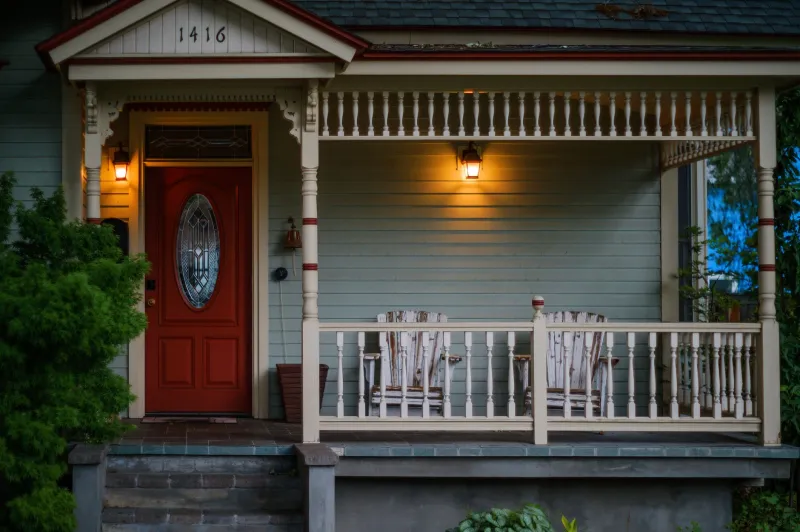
A porch light someone left on for no reason. A dog in a lit window, being a dog. The one maple on your block still stubbornly holding its leaves. A neighbor's inflatable snowman already up in mid-November, undefeated. Steam curling off a vent. The bakery that's still open at 6:15 and smells like the whole point of winter.
When you spot your thing, stop for a second. Actually look at it. Then walk home. That's the whole assignment.
Why One Is Enough
Because this isn't about collecting good things like Pokémon. It's about training attention.
Human brains come factory-equipped with a negativity bias — a very old survival feature that makes the pothole more memorable than the porch light. It kept our ancestors alive. Now it mostly just makes the news feel louder than the neighborhood.
You can't delete that wiring. But you can give it a competing assignment. Ten minutes of deliberately looking for something that's still working is a tiny, repeated vote for the idea that the evening is not actually empty. Do it a few times a week and the search itself becomes habit — the way you now automatically notice a gas station when the tank is low.
That's the real payoff. Not a nice walk. A default setting with better aim.
Cold, Wet, and Pitch Dark: Adjusted Missions
Bad weather isn't a reason to skip. It's a reason to lower the bar, which is one of the healthiest skills a person can practice in November.
- Rainy night: Your mission is reflections. Streetlight in a puddle, taillights smeared on wet asphalt, the sheen on a parked car. Ten minutes, umbrella, done.
- Genuinely freezing: Shorten the loop. Half a block and back counts. Look for warm windows and count them if you need a task.
- Sleet or ice: Skip the walk and take the mission to your own front step. Two minutes of cold air on your face, one good thing spotted from the doorway. That's still the habit.
- Exhausted: Walk to the end of the driveway. If you find your thing there, great. If you turn around and go back inside, also great.
This Is Not Another Chore
Here's where these habits usually fall apart: they get promoted into obligations. Suddenly there's a note in your phone, a streak to protect, a guilt spiral about missing Tuesday.
So let's be clear about the terms. There is no streak. There is no log. If you do this twice this week and forget about it until Thanksgiving, nothing is broken and you are not behind.
The walk is supposed to be the easy part of your day. The moment it starts feeling like a second job, drop it for a week and come back when you're curious again.
Make It Easier Than Skipping It
Friction is the whole ballgame. A few small removes:
- Leave the shoes and a coat by the door, ready like you're a firefighter.
- Gloves live in the coat pockets permanently. Not in a drawer.
- Pick a default loop — four or five blocks — so you never have to decide where to go.
- Leave the headphones at home the first few times. Half the point is hearing the neighborhood instead of a podcast.
- Set a ten-minute timer if you're the type who wanders for an hour and then resents it.
If You Notice Nothing
Some evenings nothing lands. The block is beige, your mood is beige, the whole exercise feels like a bumper sticker.
Notice that instead. "Tonight I found nothing and that's what I found" is a legitimate result, and treating it gently is its own kind of practice. Then try again tomorrow, when somebody's oven is going and the air smells like onions and you remember why you live around other people.
The light leaves early now. That's out of your hands. What's in your hands is ten minutes, a coat, and one small thing worth stopping for.