Clock Out, Walk On: Build a Five-Minute Buffer Between Work and Real Life

The commute used to do quiet emotional labor for us. It was not glamorous—traffic, crowded trains, the person who somehow needed two seats—but it created a seam. You left one place, arrived at another, and somewhere in between your brain changed costumes. For remote and hybrid workers, that seam can vanish. The laptop closes, and suddenly you are expected to be a fully available human with hobbies and opinions.
Enter the fake commute: a five-minute transition ritual that gives your nervous system a small, repeatable signal. Work is closing. Home is opening. The goal is not to pretend you are driving to an office or to add another productivity task to your day. It is to stop letting work leak into the evening like a podcast you forgot to pause.
Why a five-minute buffer beats a heroic shutdown
Most of us have tried the fantasy shutdown: close the laptop at 5:01, tidy the desk, become a person who meditates and folds laundry before dinner. It lasts for about two days. A fake commute is smaller. It borrows the old commute's best feature—a predictable in-between—without the tolls. Five minutes is short enough to actually do on a dark Tuesday in November, when daylight is already clocking out before you are.
This is not about being dramatic. It is about giving your brain a cue that is physical, not theoretical. Remote work blurs boundaries because the same room can be office, dining room, and couch. A ritual creates a tiny hallway between roles.
Pick one lane, not five
You do not need a full wellness routine. Choose one anchor and repeat it. If you try to walk, journal, stretch, and brew tea every day, you will last until Thursday.
- The loop walk. Put on shoes and walk around the block. No errand, no phone call, no while-I-am-out tasks. If the weather is gross, walk to the mailbox and back twice or do a lap around the building. The point is leaving the work room.
- The same-song signal. Pick one song or one podcast episode and use it only for your end-of-work transition. Same audio, same time. Your brain starts to associate it with the day being over.
- The shoe swap. If you work in slippers, switch to sneakers for a short walk. If you work in sneakers, switch to slippers and put your work shoes in the closet. It sounds silly. Physical cues work anyway.
- The desk-closing ceremony. Write tomorrow's top three tasks, close the tabs, and put the laptop in a drawer or under a cover. Say a dorky sentence out loud: 'Work is done for today.' Dorky works.
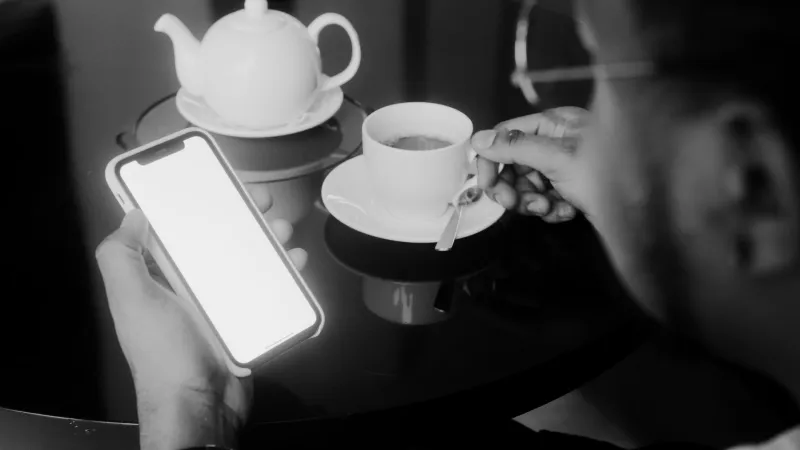
- The warm drink handoff. Make tea or decaf coffee after work and sit somewhere you do not work. Not as a reward for finishing everything. As a signal that you are off the clock.
Test it for one week like a tiny scientist
Treat this as an experiment, not a personality overhaul. Pick one ritual. Set a phone alarm for five minutes after your planned end time. Do the same ritual for five workdays. Each evening, give the night a quick score from one to five: How much did it feel like my own time? Did I keep checking Slack in my head? How did I sleep?
Do not change everything at once. If you work late one night, skip it without declaring failure. At the end of the week, ask three questions: Did evenings feel less like a shrug? Did I stop rehearsing work sentences in the shower? Did I fall asleep with my brain still in a meeting? If two of the three improved, keep it. If not, adjust the ritual rather than abandoning the idea.
Make it sturdy, not precious
A fake commute fails when it becomes another thing to optimize. It does not need a fancy journal, a specific brand of tea, or a perfectly timed sunset. Have a ninety-second backup version for chaotic days: step outside, take three breaths, and say, 'Done for now.' Tell the people you live with what you are doing so they do not schedule a household meeting in the middle of your five minutes.
And try not to use the commute to solve work problems. This is not the time to mentally draft tomorrow's email. It is a buffer, not a second shift.
The brighter evening is the point. Optimism does not require pretending the day was great. It is noticing that small boundaries can change the texture of a night. Try it this week: five minutes, one signal, one week. You might find that the end of work becomes something you can feel again.